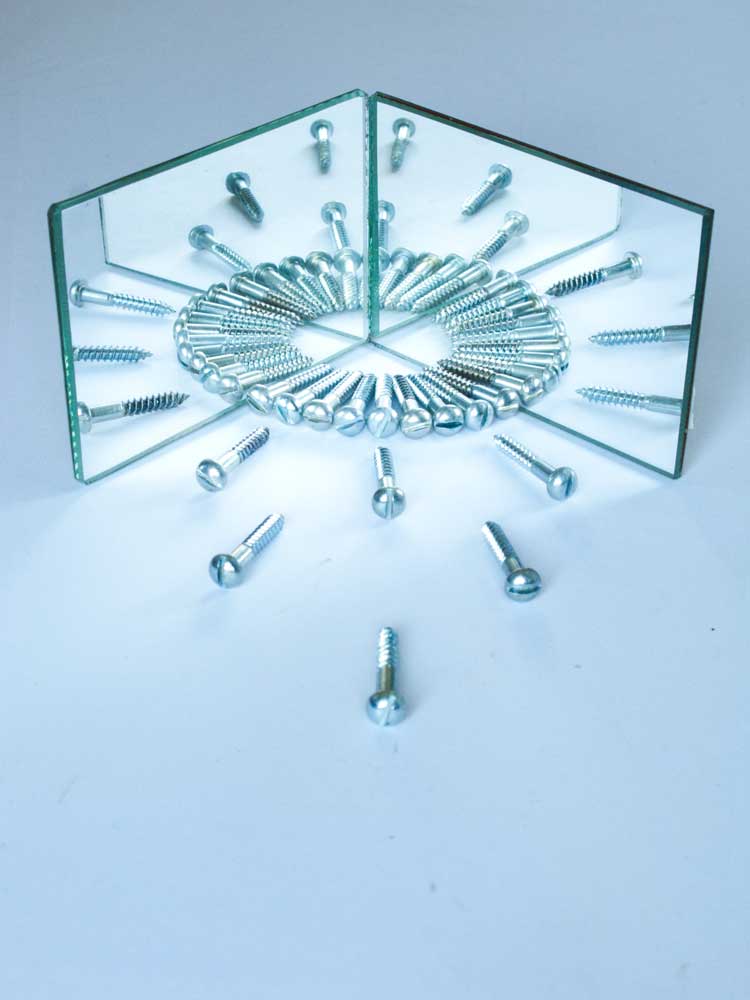
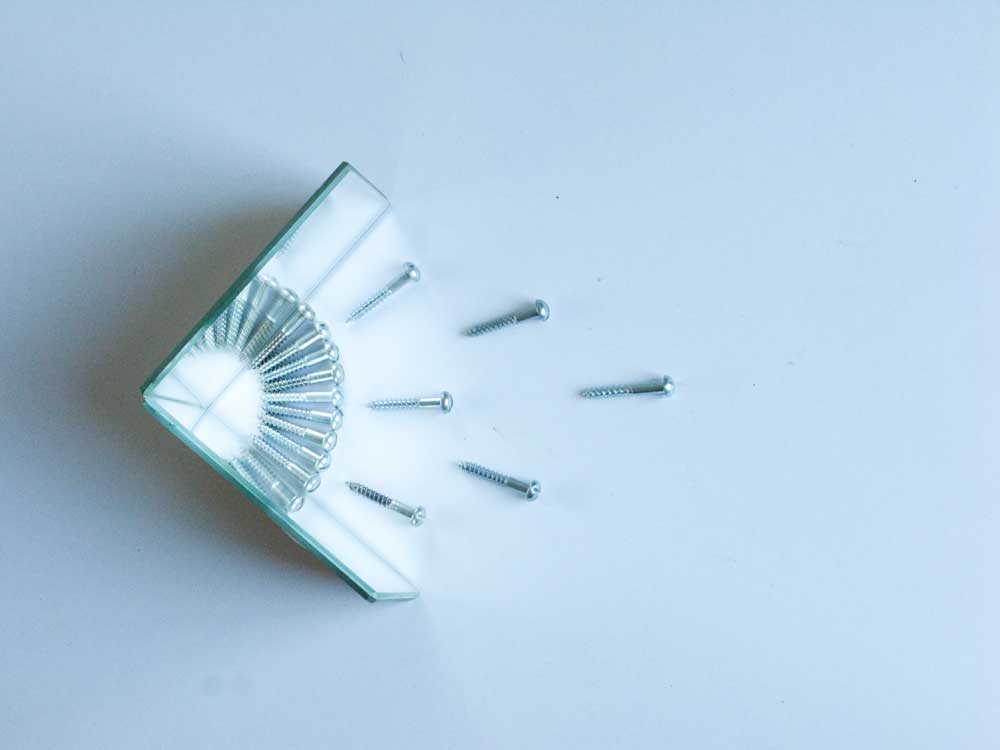
A study of reflections using mundane everyday objects to create interesting multiple reflections. Here ordinary hardware screws are arranged to form a dynamic expansive configuration. Screws lend themselves to this study partly because of their physically dynamic shape – large at one end and then tapering away at the other – and partly because of their intended purpose, which is to hold things in place – the exact opposite of dynamic expansiveness – which brings a slight touch of paradox to the work. If anyone looking at the image feels that I ought to have lined up the screw heads, it’s a deliberate act not to have aligned them, even though in real life I am an obsessive screw head aligner.
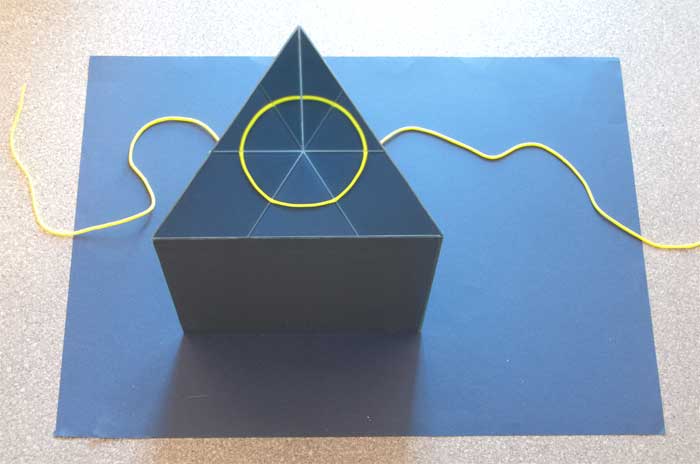
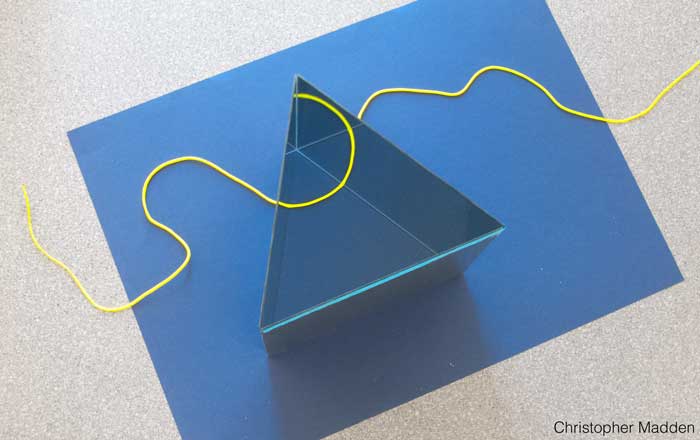
An example of one of my contemporary art projects exploring mirrors, reflections and illusions, here using a piece of cord that is reflected multiple times to give the impression of a closed circle.
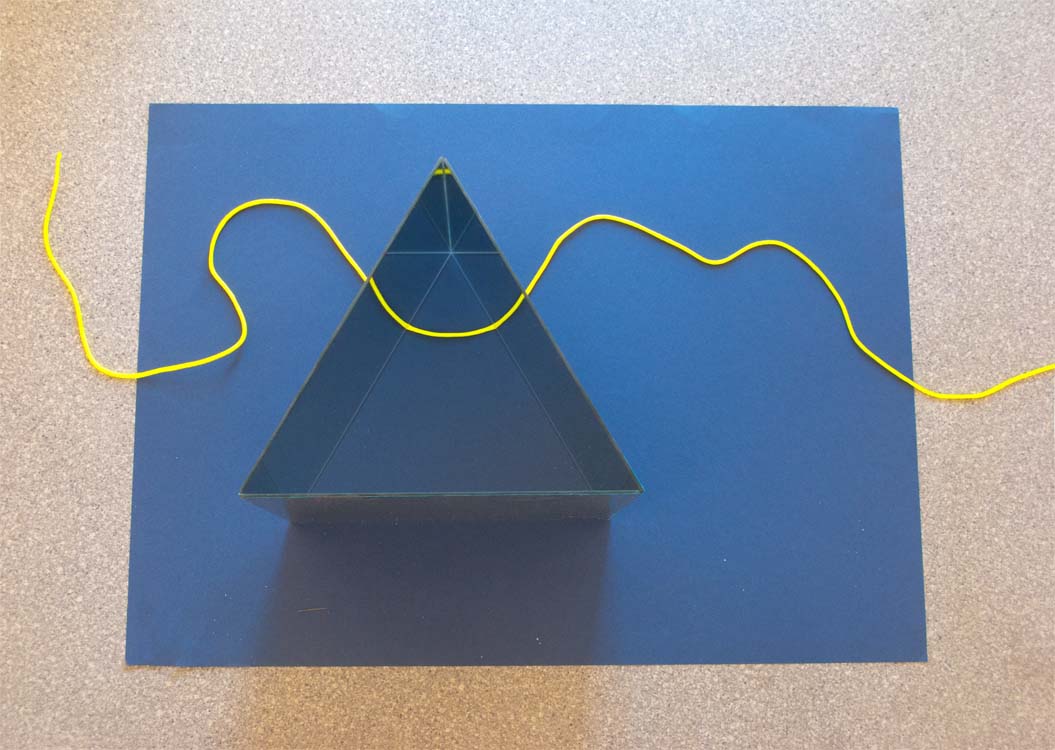
This work consists of three mirrors arranged as a triangular box with the reflective surfaces facing inwards. The box is placed over a length of brightly coloured meandering paracord. The cord is laid so that the section that lies inside the triangular box is reflected on the box’s sides to give the illusion of forming a circle. The second photo shows the work from a different angle to show the structure.
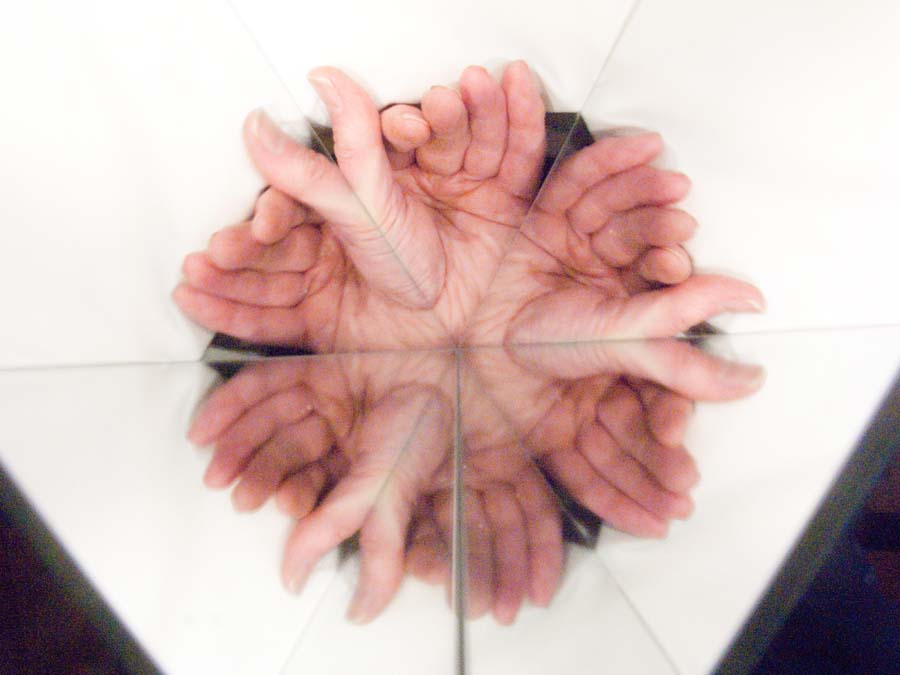
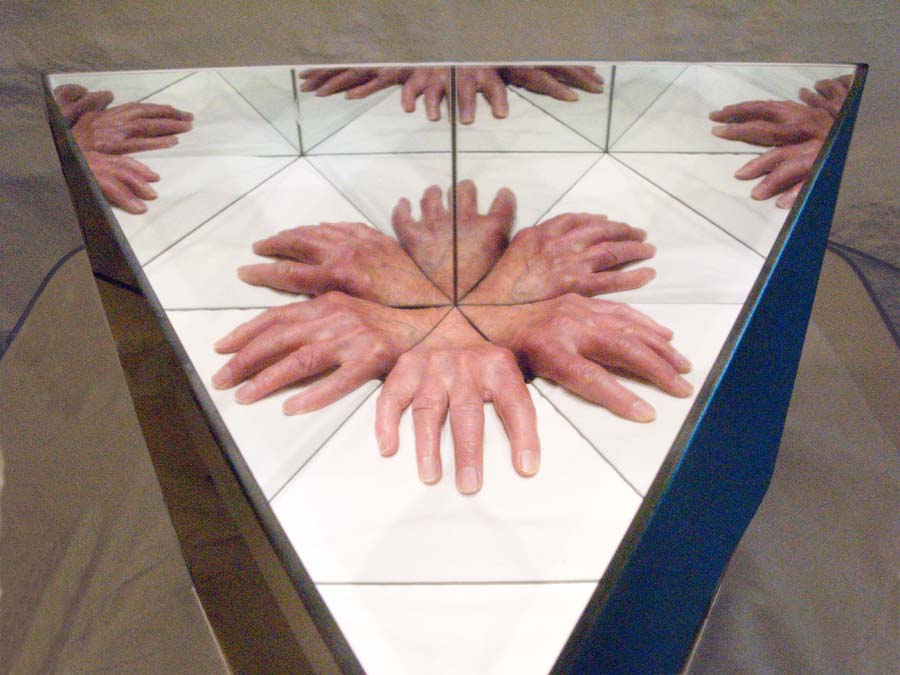
Metamorphosis: reflection of a hand into an alien creature
Mirrors and hand. October 2016
Three mirrors forming the vertical sides of a triangular box turn a hand into an alien creature by multiple reflections. The hand is intruding into the box through an opening in the corner. The artwork is an exploration of how a familiar object (a hand) can be transformed into something completely alien purely by the use of simple mirrors. A study of the familiar becoming unfamiliar via a mundane agency. When the fingers of the hand move the effect is surprisingly disturbing (I’ll make a video of it when I can).
Visualisation of artwork in the foyer of an office
Video/photo montage. 2022
Look at the image above for a second time after a few seconds and notice how the artwork on the wall has changed.
It’s a visualisation of an animated artwork on the foyer wall of a large office building, with the artwork montaged onto a static image. The rotating forms within the artwork are moving slowly here so that they create an ordered, calming effect. The speed of the movement can be changed, for instance to create a faster, more dynamic feel if necessary.
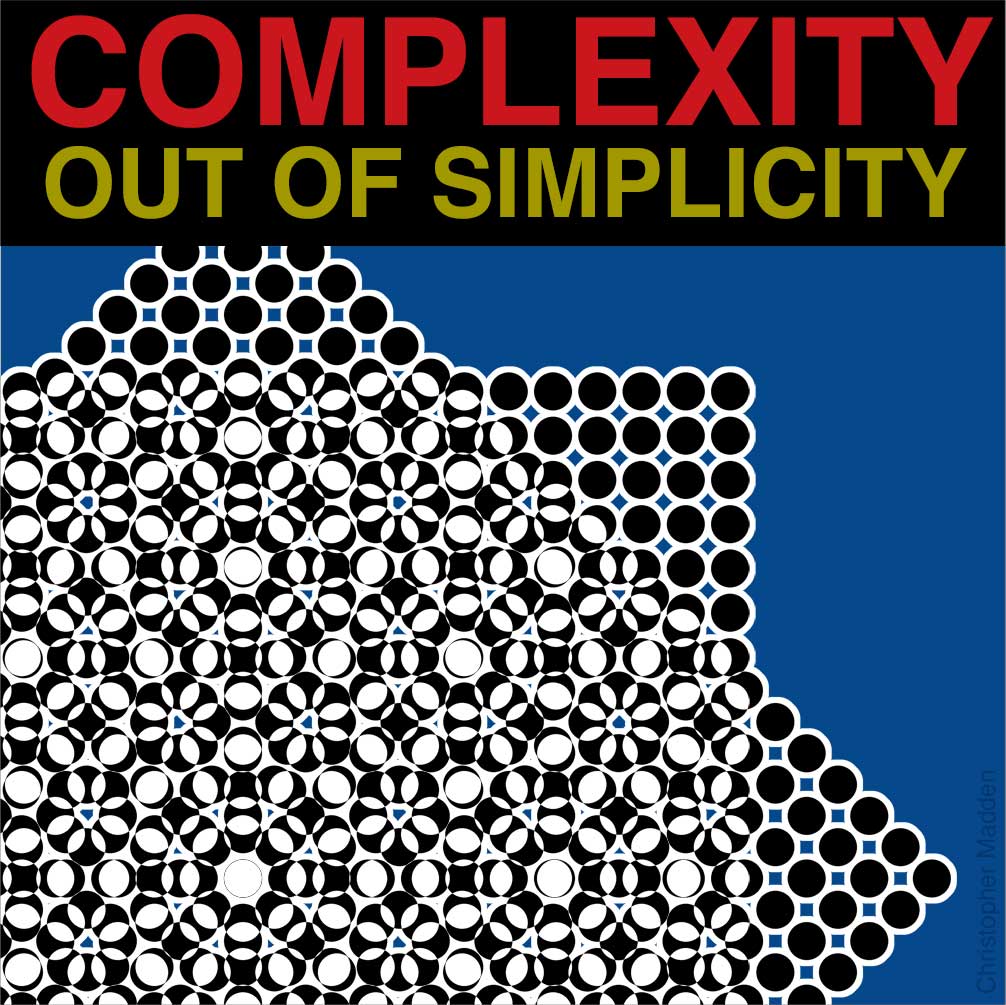
The works in my Complexity series, such as the example shown here, lend themselves very much to spacious office foyers due to the way that they work well at very large scales.
The amount of detail that is generated in these works is very high, as can be seen in other examples here. The works can be displayed as static images or as very eye-catching animated images (either projected or on electronic displays). Any corporate art consultancy that is interested in this work – please get in touch!
A static image of the work.
post content
Sheep skull
Photographs 12th February 2016
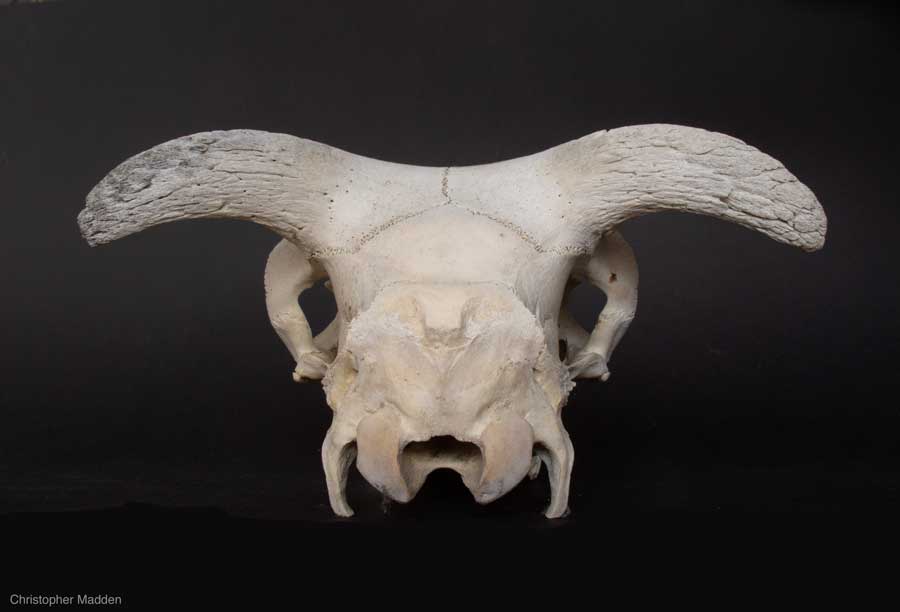
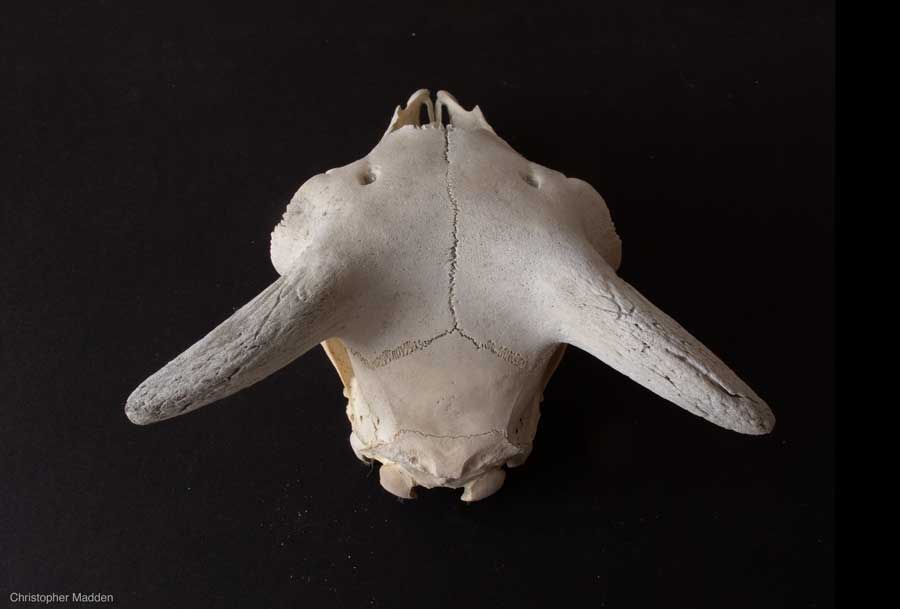
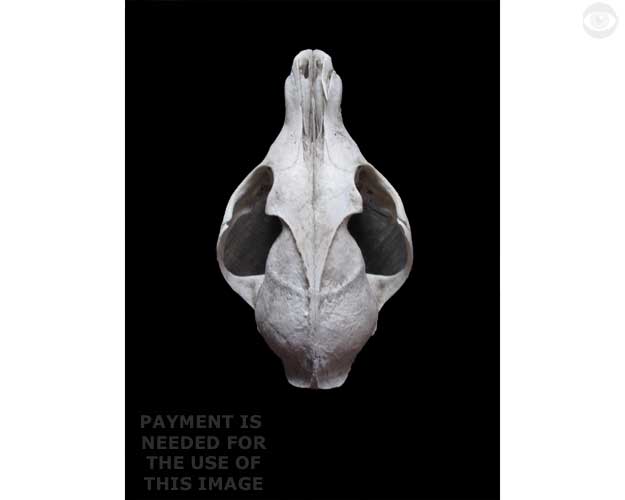
Photographs of a sheep skull from the rear.
The unusual viewpoints in these photographs make the skull look unfamiliar.
In the first photograph, above, you can’t see the eye sockets or the parts of the mouth or nasal cavities, but the image shows features that are readily, but wrongly, interpreted as these features. There seem to be eyes at the sides of the skull and a mouth at the base (This is the hole where the spine and the skull meet). There’s even a small bony structure that resembles a nose.
More fancifully the bones that seem to form the outer edges of the eyes can be interpreted as being little arms that are dangling from the junctions of the skull and the horns, and the small bony appendages at the base of the skull can be interpreted as little legs.
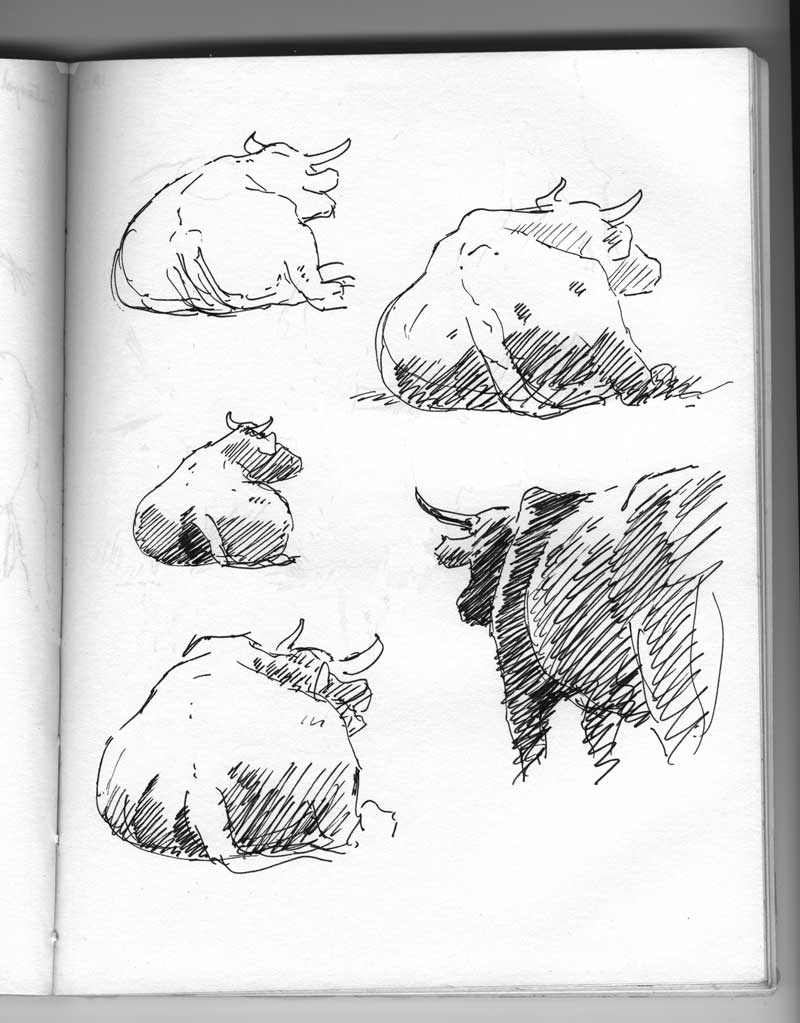
Dip pen and ink sketch on paper.: Cows, Cantegral, Dordogne, France
Dip pen and ink on paper. September 1991
A sketchbook page of cattle grazing in a field.
The sketch was drawn in situ, using dip pen and ink.
Dip pen and ink is a favourite medium for sketching. Different nibs on different paper produce different results. I’ve got a supply of hundreds of nibs in case they ever go out of production!
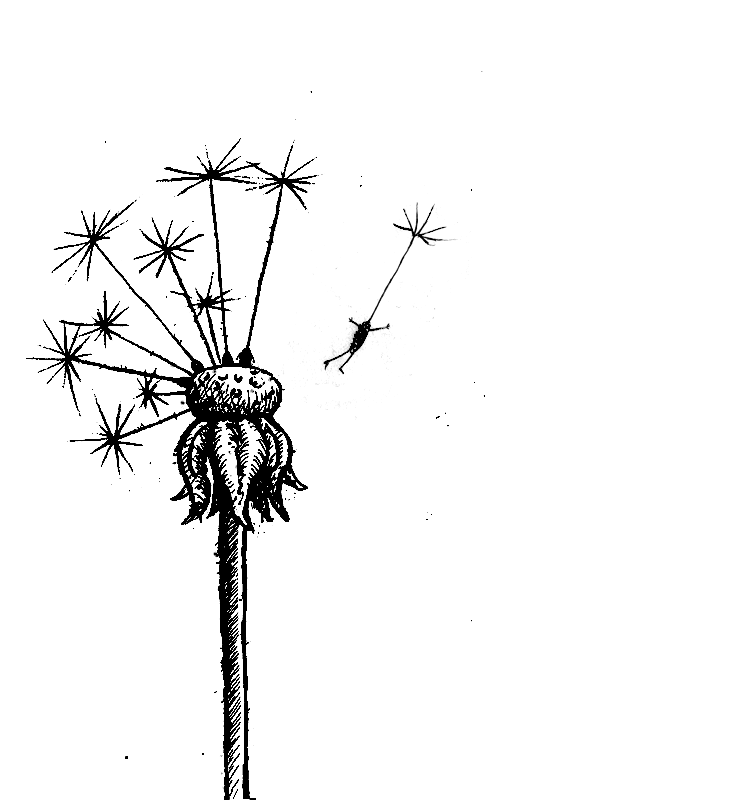
Anthropomorphism: dandelion seeds with human bodies
Pen and ink sketch on paper September 2015
A dandelion seed head in which the seeds have anthropomorphic human form. The image is disturbingly ambiguous. Is the fact that one of the seeds is drifting away from the seed head a sign of freedom or simply a sign of fate? And what can be read into the fact that the humans in the anthropomorphic seeds have no heads? Anthropomorphism is a common theme in my work.
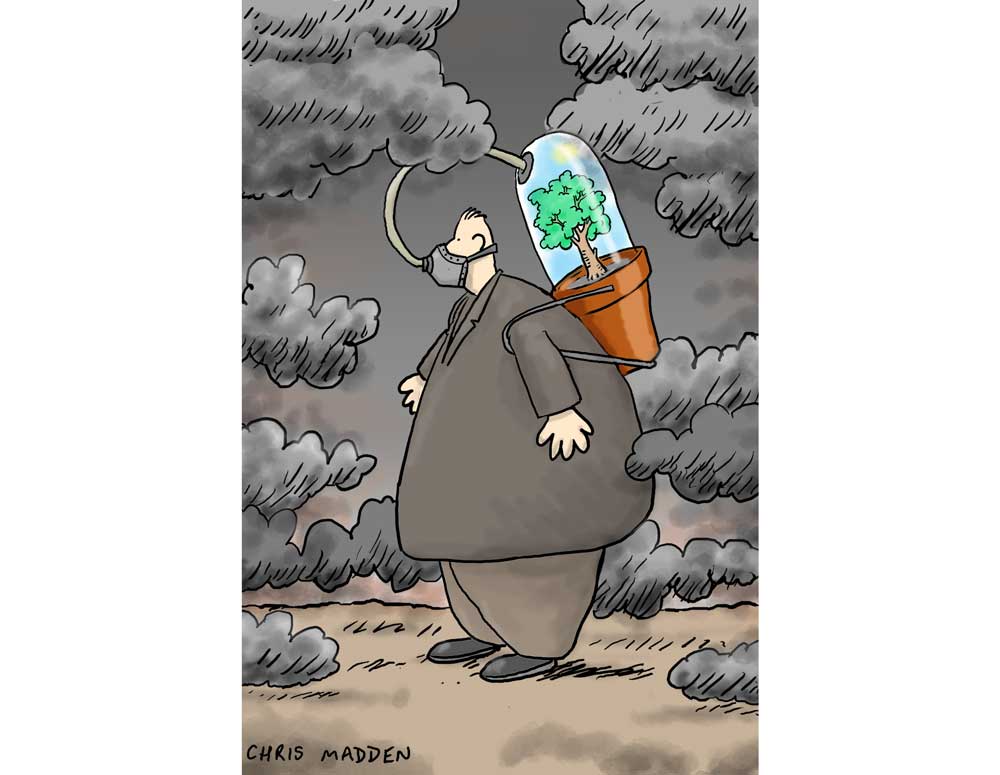
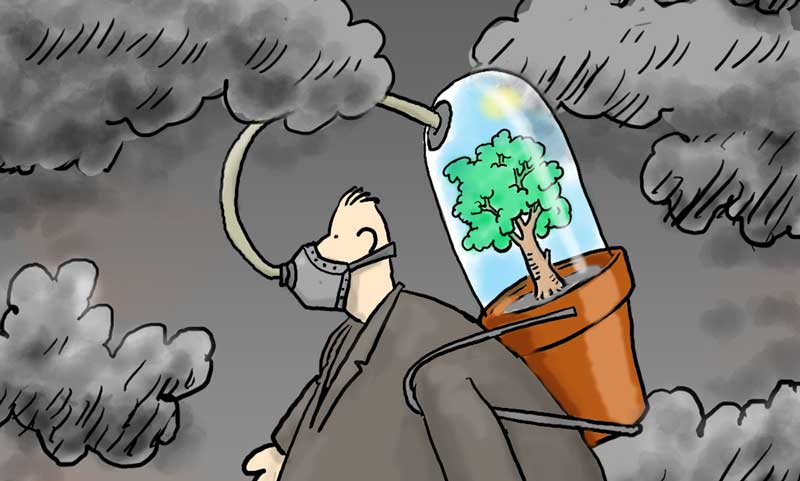
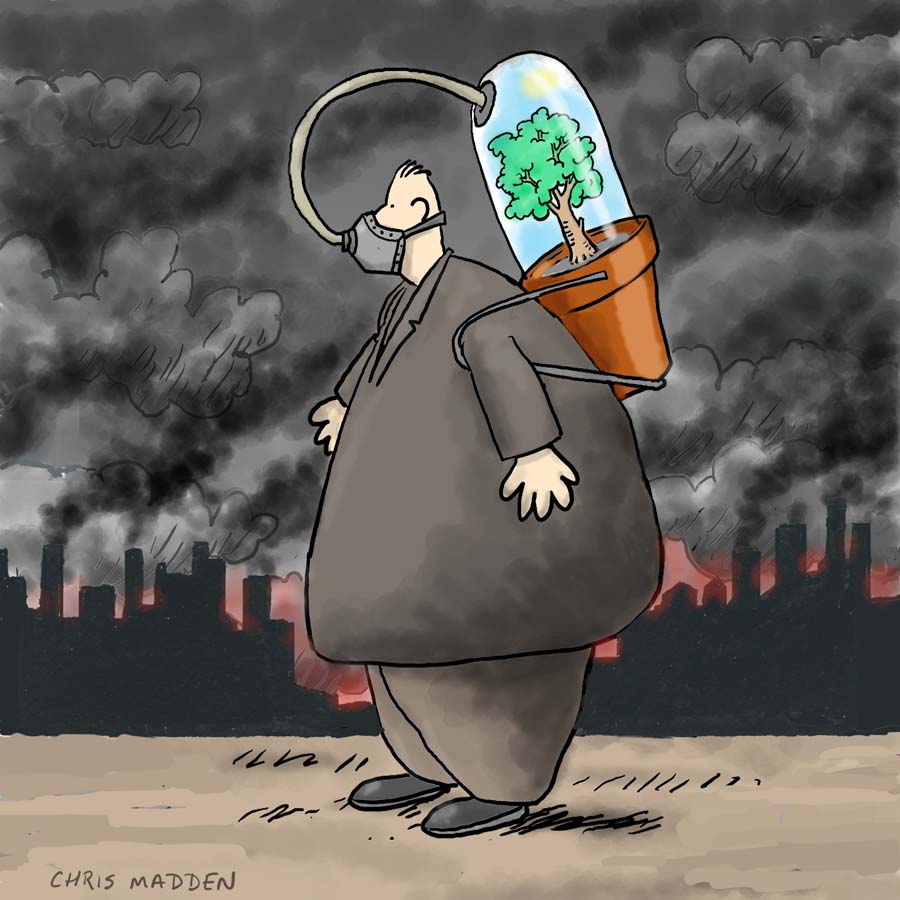
Contemporary art and climate change – breathing on a polluted planet.
Digital image. First version: 1991; this version: 2015
A work of environmental contemporary art concerning climate change and pollution. This work is created in a cartoon-like style. There are several reasons for this. One is that I create quite a lot of cartoons (which have been published in newspapers such as the Guardian and magazines such as Private Eye), and another is that I think that the cartoon style is a particularly good and direct way of communicating about subjects such as the environment, global warming, pollution and the various crises that are currently afflicting our planet. One of the appeals of the cartoon art style is that it generally lacks ambiguity, so its message is clear and unmistakable, which is very important with subjects that are as important as climate change, global warming and the environmental issues. Other contemporary art styles are often at their best when they contain a degree of uncertainty or ambiguity about what is being said, requiring the viewer to interpret the work as they see fit. Contemporary art that puts forward a message unambiguously can often tend to come across as rather dead, didactic and hectoring, which I think the cartoon style tends to avoid. Also of course, cartoon art, due to its nature, can easily be reproduced in print or electronically without loss of quality (both physical quality and emotional quality), thus making it available to a much wider audience than most contemporary art – which can only be a good thing when the work tackles important subjects such as the environment and climate change.
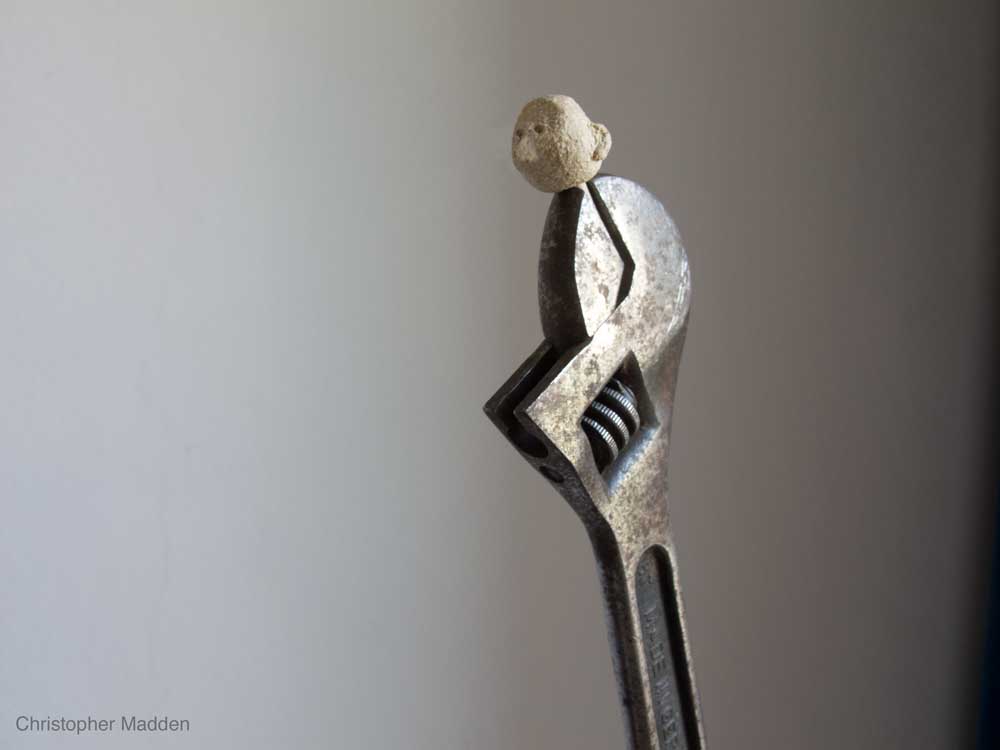
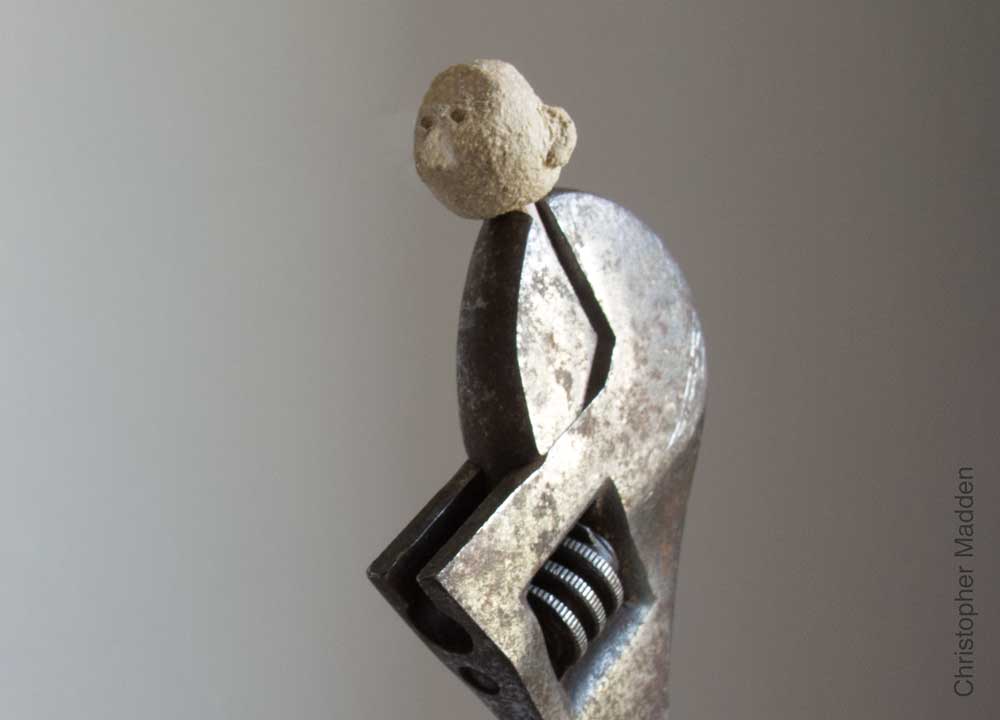
The ceramic head in this sculpture is held in the jaws of the spanner by a thin wooden rod that forms the head’s neck. It is uncertain whether the head is trapped in the jaws of the spanner or whether the head and the spanner form a single entity, with the spanner as the body (The shape of the spanner suggests a seated or crouching body). It could be interpreted that the head in the sculpture represents the thinking part of the person, while the spanner represents the physical body of the person, the thinking part thus being clamped (possibly against its will) to the physical part. This could have metaphysical connotations or connotations invoking the expression “born in the wrong body”. This tension of ambiguity of meaning is one of the things I like about the piece. Workshop tools and handyman tools such as spanners, hammers and pliers are a recurring feature of my small scale sculptural work.
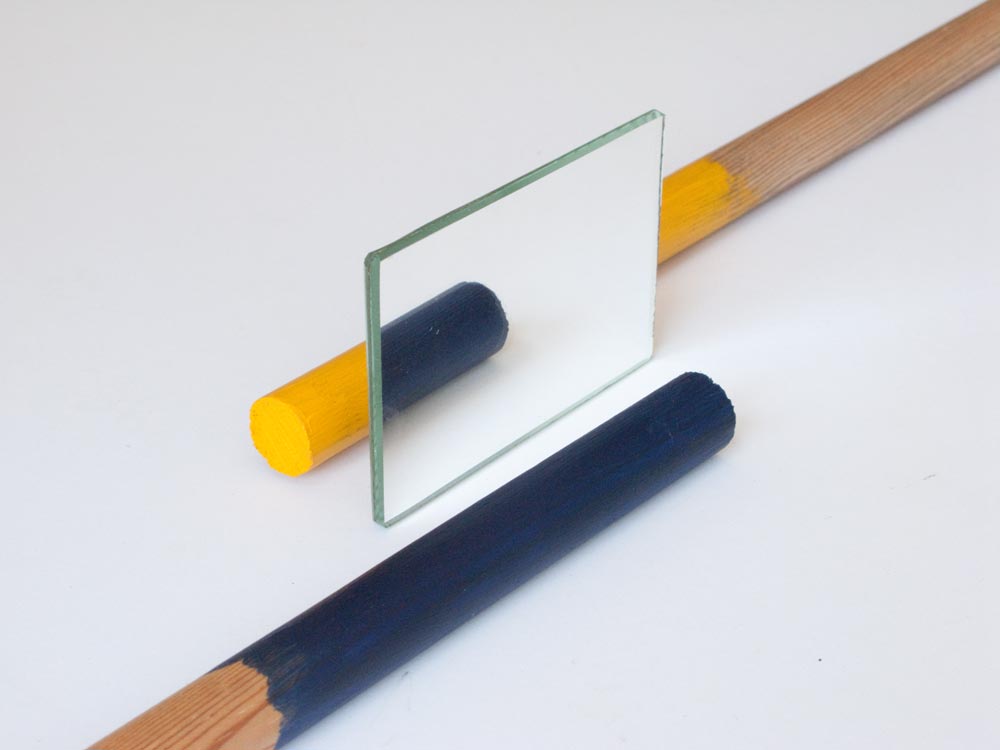
Colour Discontinuity 2. Optical illusion in mirror.
Mirror, coloured wooden rods. March 2017
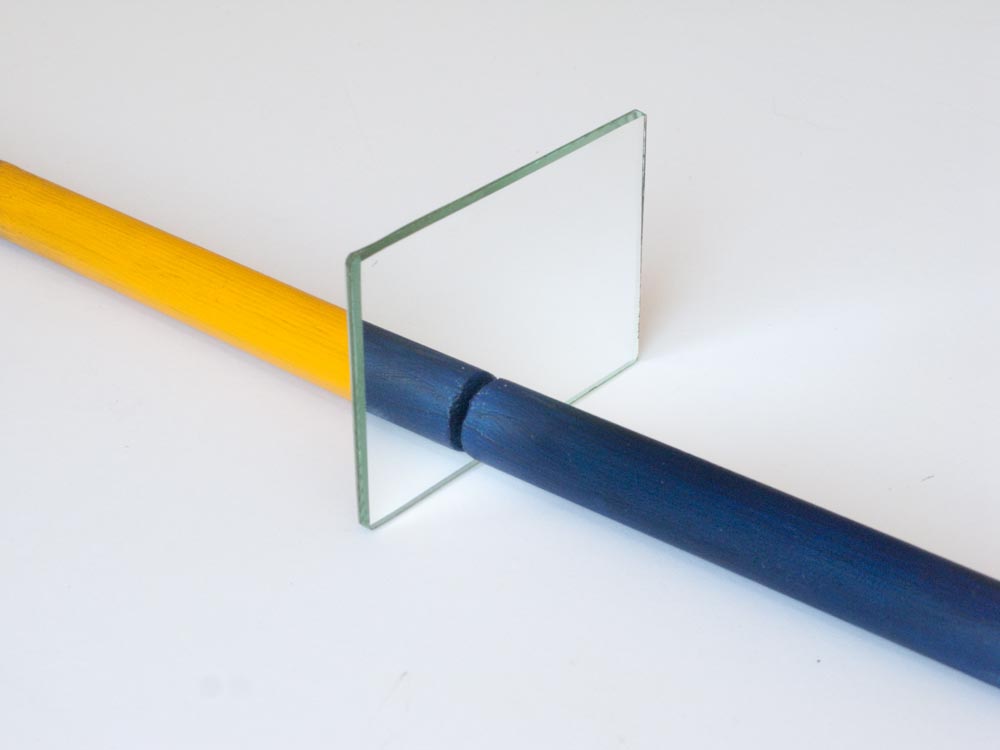
A coloured rod reflected in a mirror, positioned so that the reflection in the mirror coincides with another rod of a different color on the other side of the mirror, creating an ambiguous optical effect.
A study in the perception and interpretation of ambiguous visual stimuli annd illusions. The study of reflections and their interpretation (especially illusions)is a common theme of my work. I have been fascinated by mirrors for most of my adult life, starting as a teenager in the late 1960s when I ground the parabolic mirror of an astronomical telescope that I constructed (It was an eight and a half inch mirror).
Colour Discontinuity 1. Coloured rods reflected in a mirror
Mirror, wooden rods, acrylic paint. July 2015
A coloured rod reflected in a mirror so that the reflection in the mirror coincides with a differently coloured rod on the other side of the mirror, creating a form of ambiguous optical illusion.
A study in perception, illusion and the interpretation of ambiguous visual stimuli. I’ve been interested in mirrors and reflections since I was a teenager in the late 1960s. My first mirror based work was done at that time. It started a science based endeavour rather than an artistic one – involving the construction of an astronomical telescope, including the grinding of its primary parabolic mirror.
Humour in contemporary art. Defaced/refaced statue.
Classical statue, marker pen. June 2015.
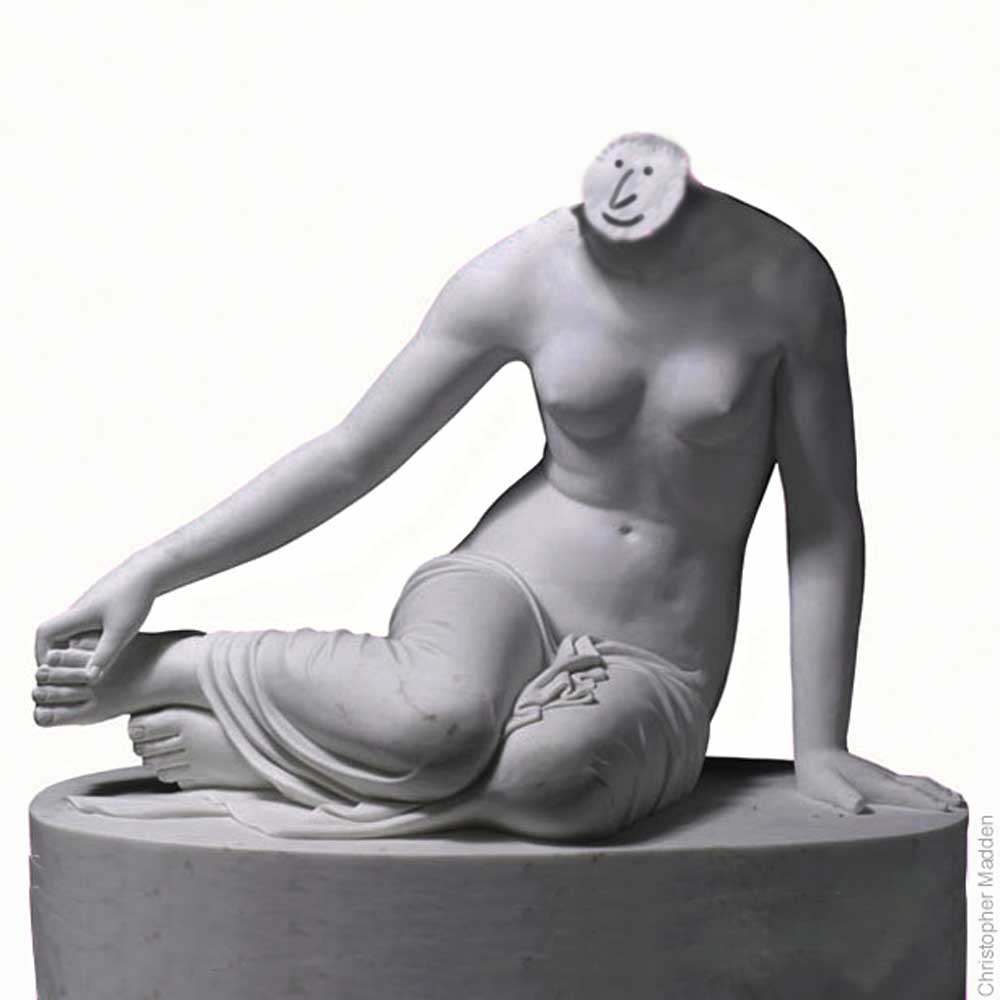
A humorous work consisting of a headless classical statue with a cartoon-like face drawn onto the oval form of the neck. Part of the humor of this piece is the juxtaposition of opposites – the elegant and timeless form of the classical statue in contrast to the crudeness and immediacy of the contemporary cartoon head. The piece also contains dark humour and an unsettling quality due to the fact that the drawn two-dimensional head is occupying the surface created by the decapitation of the statue’s three-dimensional head. The drawn-on face also has the appearance of graffiti, so it could be said that the act of giving the statue a face is in fact defacing the statue. The word deface literally means to remove the face (as occurred with iconoclasm and the vandalisation of statues in the past), so the fact that the act of adding a face to a statue can be interpreted as defacing the statue is ironic. Humour is an important element in a lot of my contemporary art work. As well as being an artist I’m also a cartoonist, with my cartoons having been publishered widely in publications such as the Guardian, the Daily Telegraph, the Sunday Times and the Irish Sunday Independent newspapers, and magazines such as Private Eye, the Spectator, Prospect, the Critic and more.
The Oppressor Impaled by the Oppressed. Hammer and nails sculpture
Hammer, nails, plank. June 2015.
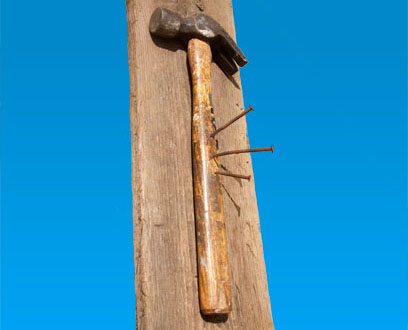
A sculpture composed of a hammer nailed to a plank of wood. The hammer is being empaled by the objects that it normally hits. This can be interpreted as a metaphor for oppression and rebellion, and it’s also a study in irony. How did the nails come to be impaling the hammer? Were the nails hammered into place by another hammer? In this case the nails may not be the downtrodden oppressed rising up to overthrow their oppressor using their own power, but are possibly the followers of another power (another hammer?) that may turn out to be as oppressive as the hammer they’ve empaled.
Other versions of this piece have the hammer on a horizontal surface, such as on the top of a plinth, while further iterations use different numbers of nails. The vertical version shown here is in some ways disturbing because the vertical configuration gives more of an impression of the hammer being violently empaled rather than simply nailed down to the spot. It is also disturbingly suggestive of a crucifixion in Christian iconography.
This video starts slowly. Don’t stop watching it during the first 20 seconds or so.
30 Interacting Disks
Abstract moving image February 2015
An abstract moving image work from a series in which multiple copies of a single shape move and interact using simple computer algorithms, creating complex shapes. In this work 30 disks follow circular paths. Where even numbers of disks overlap they present white, while where odd numbers of disks overlap they present black. A key motive behind these video animations is the linking of art and science through the exploration of the creation of complex forms from the interaction of simple forms.
Below are some still frames from the animation.
To see higher resolution videos and more information about this series click here.
A photograph of a fox’s skull. Nice abstract sculptural quality I think, accentuated by the lighting and the simple composition. Like many people, I find bones, especially skulls, very evocative. I think that it’s possibly a mix of the aesthetic qualities of the physical form of the bones and a realisation of what they actually are. They are a very concrete reminder of the transience of life: memento mori. You’d have to ask an evolutionnary psychologist what it is that makes them aesthetically pleasing, or indeed what it is that makes anything aesthetically pleasing.
The generation of complex forms from simple forms.
Digital works. Series begun 2008
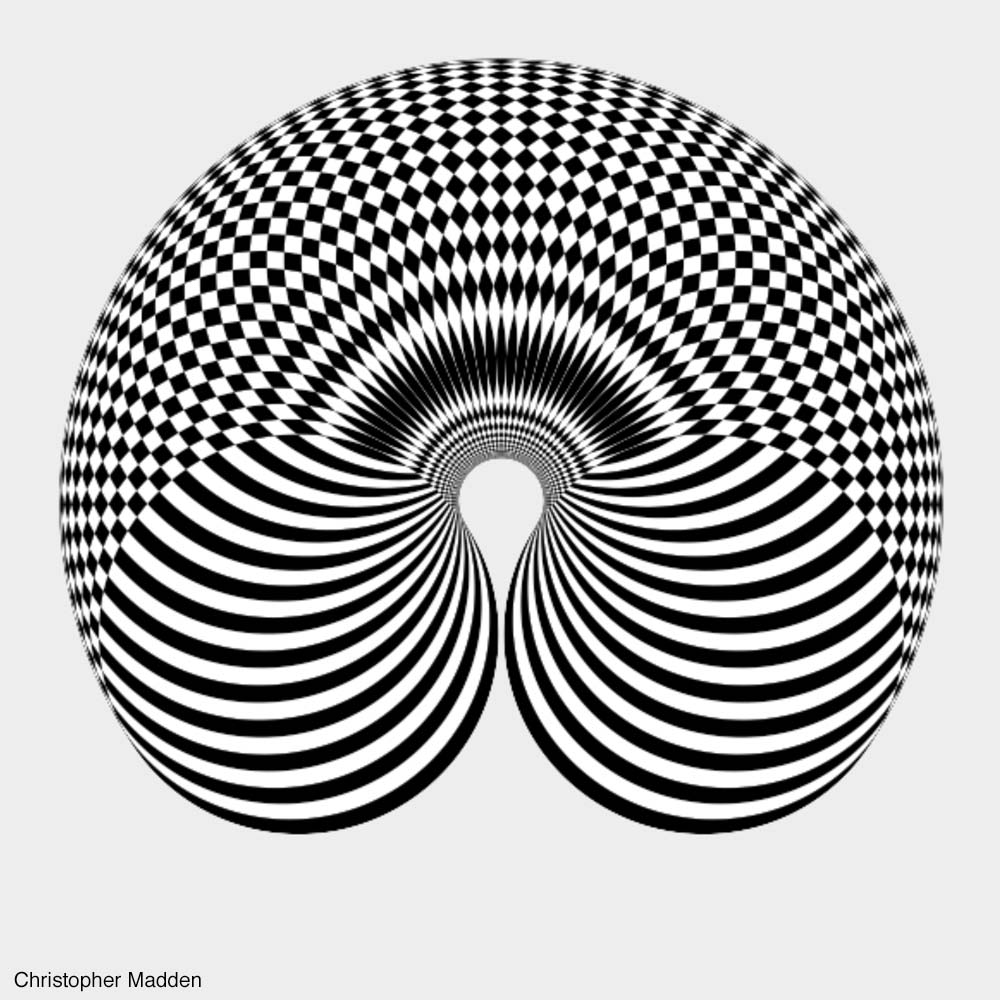
This is a design to accompany a series of video animations that explore the creation of complex forms from simple forms. The animations are often in the form of rotating grids, though not always. The works were first conceived as a device to visualise the creation of the complex structure that underlies the physical universe from extremely simple fundamental components. Very much an example of art meets science. More on the subject.
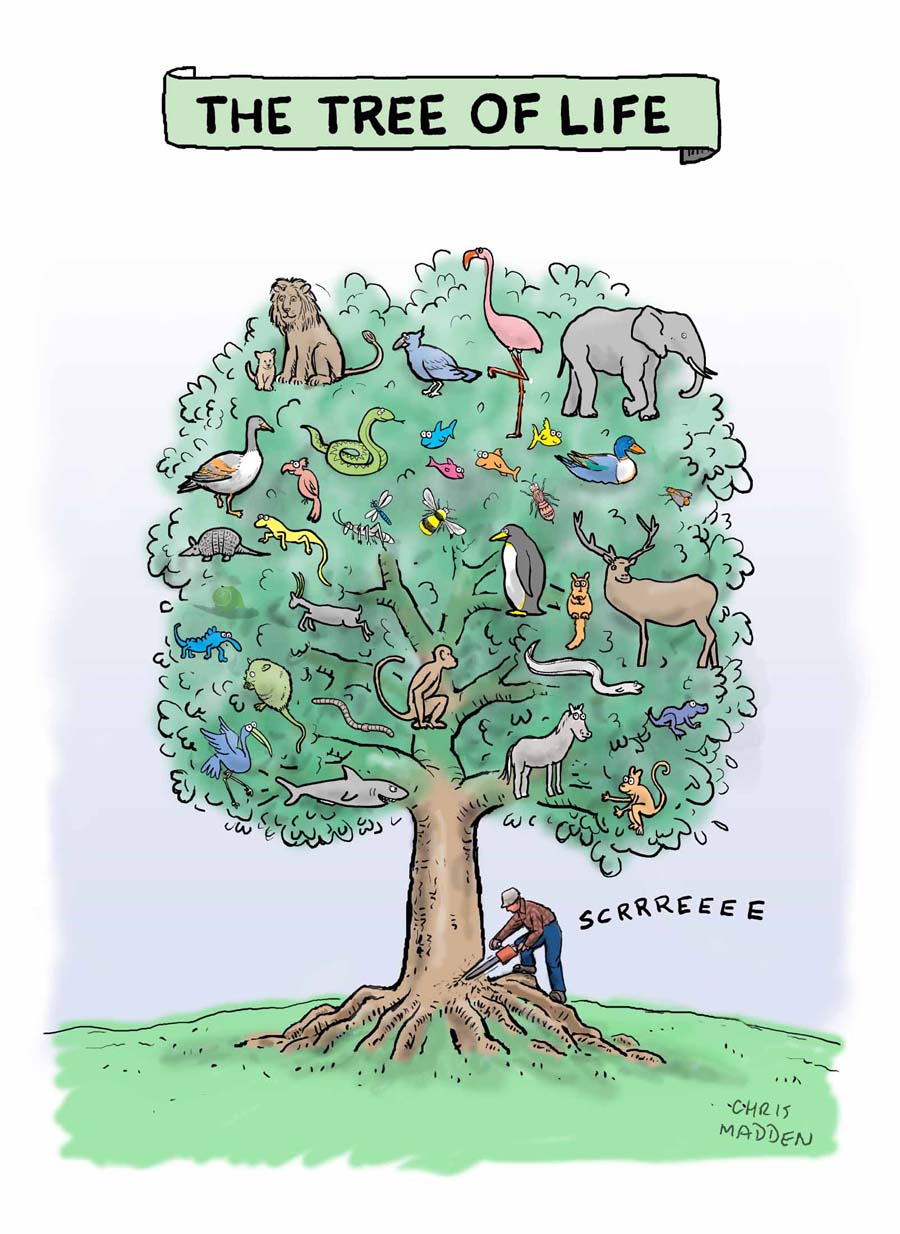
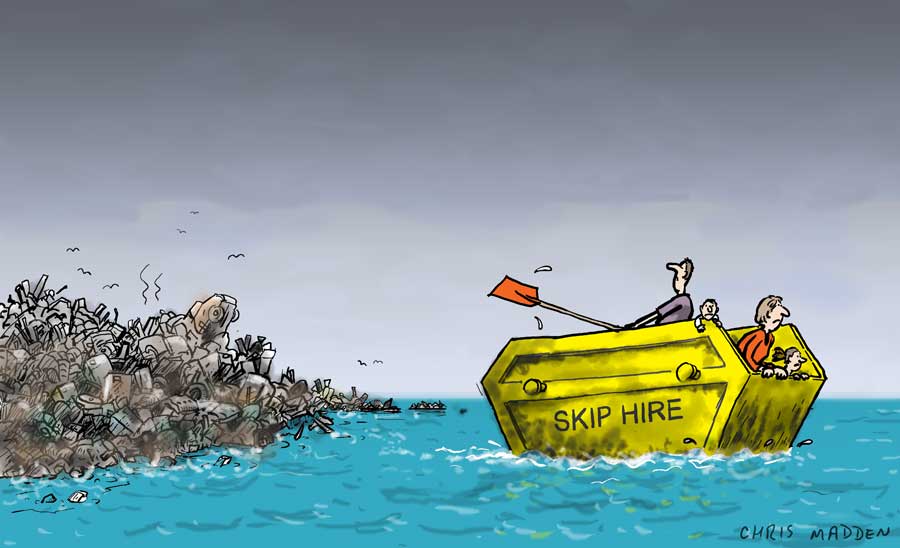
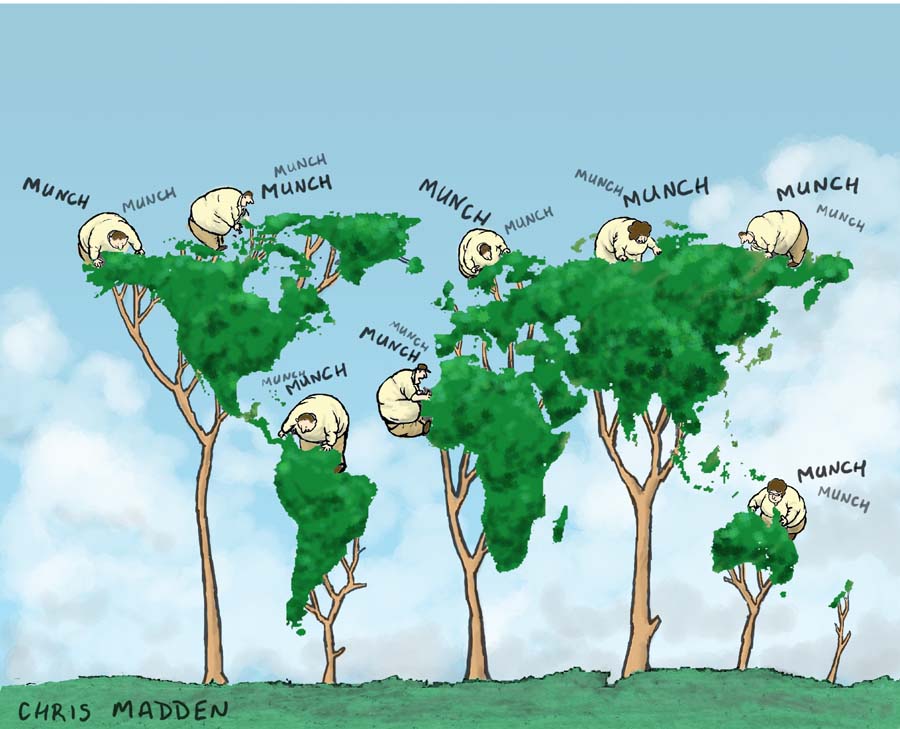
I’ve been drawing and publishing cartoons since the late 1970s, on subjects such as the environment, politics, the arts, science, philosophy and current events.
They have been published in the Guardian, Private Eye, The Spectator, Prospect, Philosophy Now, BBC Focus, Chemistry World and New Scientist among others.
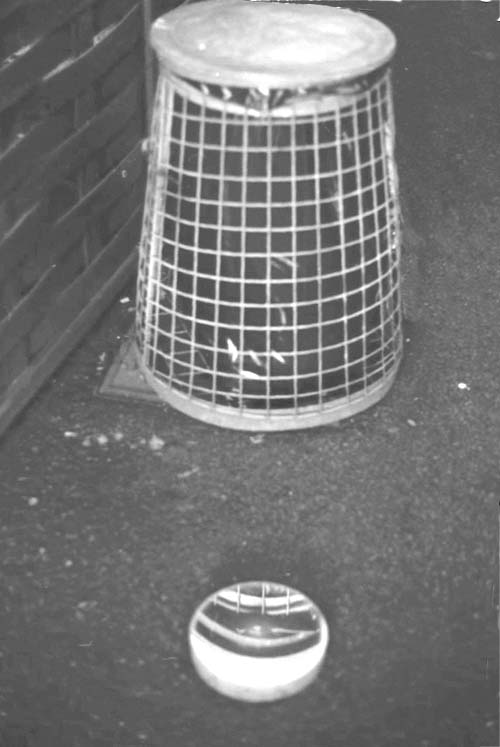
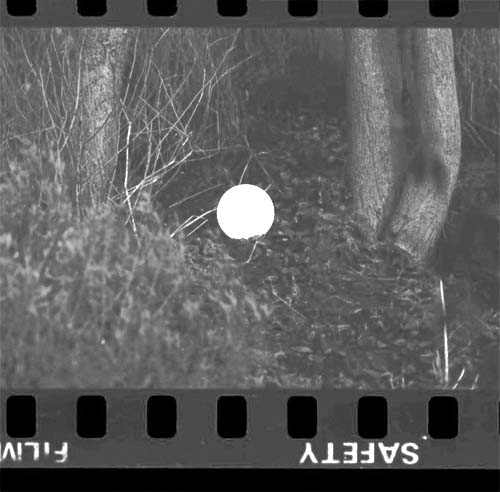
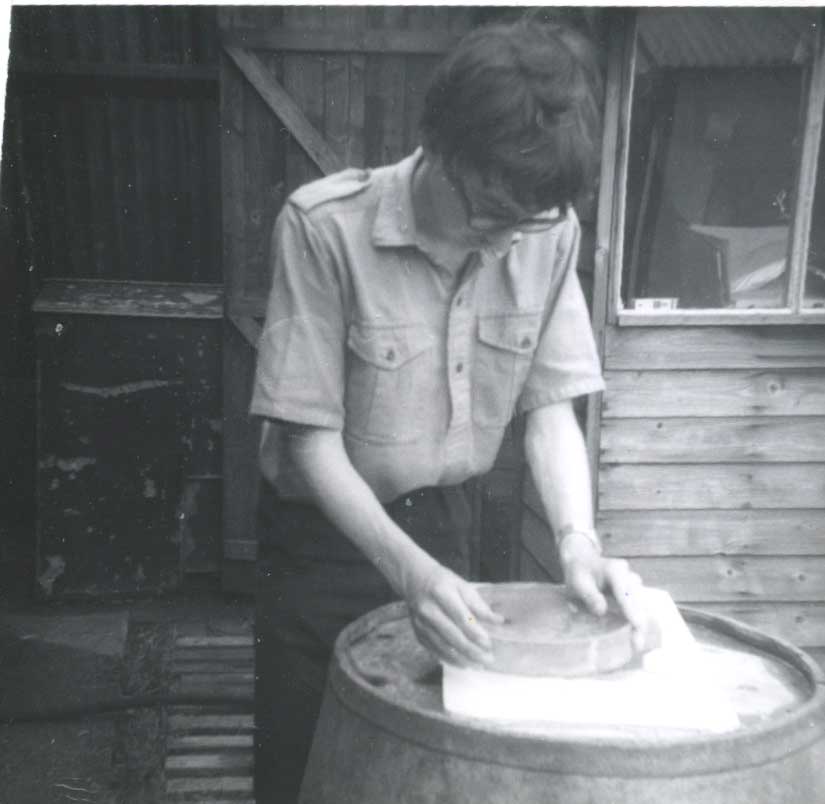
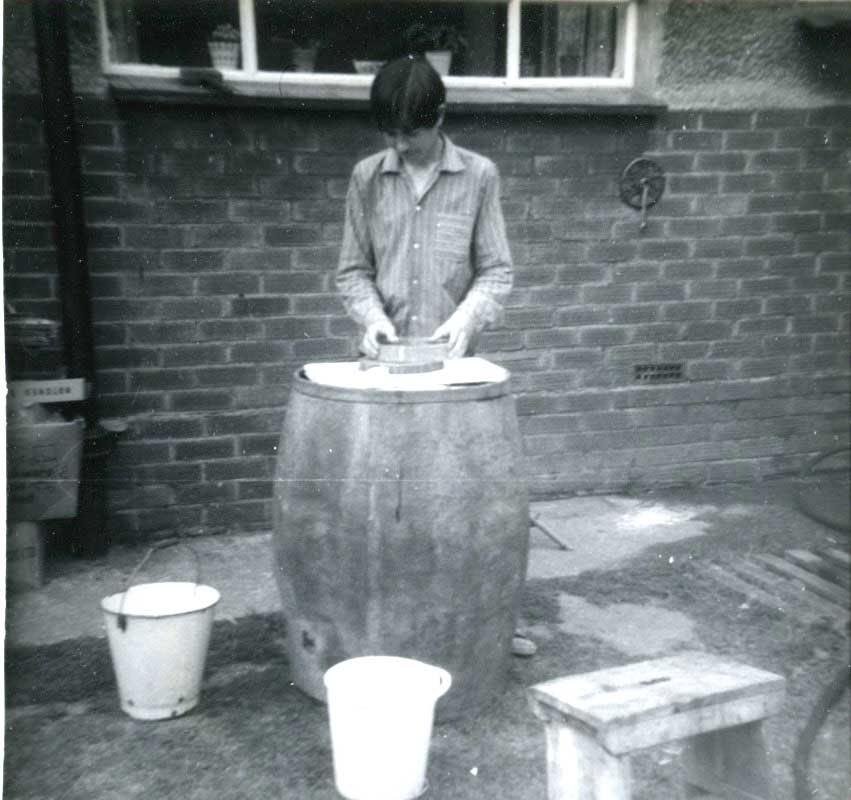
These photos show one of my early artistic experiments using mirrors when I was a sixteen years old still at school. My apologises for the quality of the images – they are quite old and I developed the negatives and printed them myself.
I think if I were to give this work a name now I’d probably call it Sky Bridge or something similar, because it links the earth to the sky. The name Sky Mirror also comes to mind, but Anish Kapoor’s already used that.
The concept behind the mirror actually bears several similarities to Anish Kapoor’s Sky Mirror, in that it’s a concave mirror that reflects the sky, although Kapoor’s Sky Mirror is thirty times the size and cost about a million pounds more. I think I probably paid for this one from the money from my paper round. Anish Kapoor wasn’t yet a student at Hornsey College of Art at the time of these photos.
The mirror is an eight and a half inch parabolic mirror which I ground for a Newtonian reflecting telescope that I constructed as a teenager in 1969. My ambition for a career at that time was to become an astronomer, not an artist.
As you can see from the first two photos, I’ve positioned the mirror in front of a rubbish bin (of a type that was used in the late 1960s) in the least aesthetically pleasing part of my parents’ garden.
The second photo, below, (which is massively underexposed in order to show the mirror, which would otherwise be just a disk of burnt-out white), shows the mirror propped up against the rubbish bin. You can see the sun and the sky reflected in the mirror. This is perhaps meant to show the contrast between the beauty and purity of the sky in contrast to some of the rubbish created by human endeavour (or to be more specific, my parents). It’s probably also meant to show that ultimately everything is connected, the beautiful and the ugly, the transcendent and the mundane.
The photo below shows the mirror on the ground amongst some trees. This is probably meant to show the link between the earth, the natural world and the sky, and by extension the cosmos.
Me grinding the mirror in my parents’ back garden in 1969.My brother, Pete, grinding the mirror
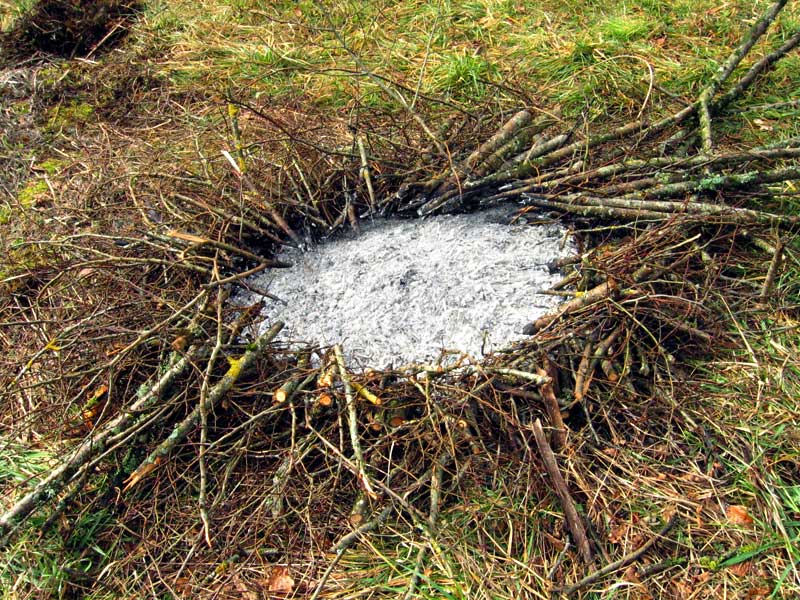
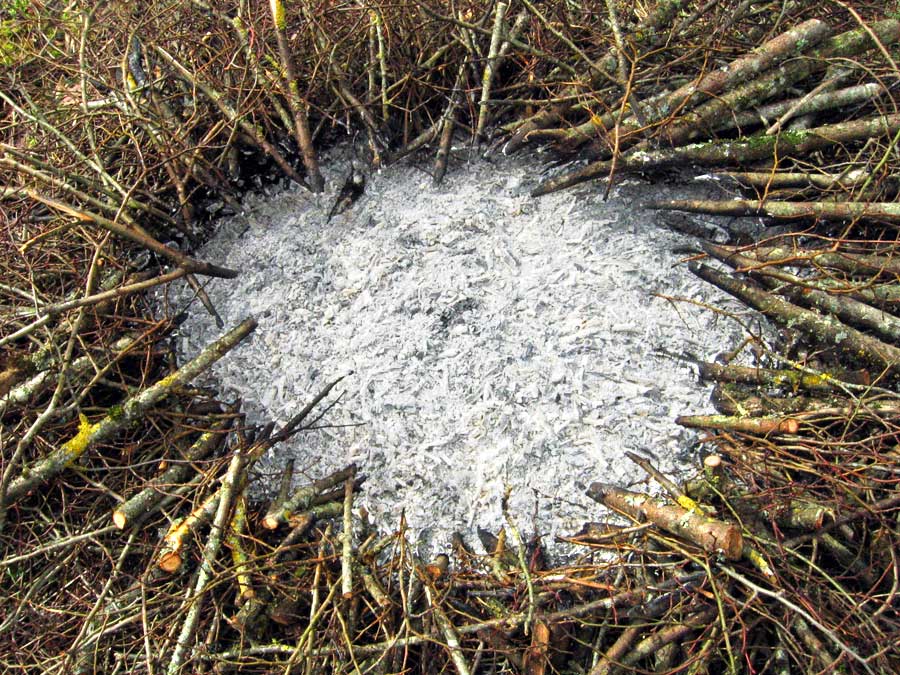
The results of a fire made of green wood. The wood at the centre of the fire has been consumed by the intense heat of the fire. The wood at the edges of the fire remain unburnt, forming an almost perfect ring of twigs and small branches around the ash core. The work invokes issues conncerning both the constructive and destructive effects of fire, and by extension of human activity.
I’ve been creating environmental art and art based on environmental issues since the 1970s.